Trying to decide between Boulder and its nearby suburbs for your next home? You are not alone. Many buyers want the right mix of home style, price, commute, and everyday lifestyle, and the right answer often depends on how you want to live day to day. This guide breaks down how Boulder, Erie, Lafayette, and Broomfield compare so you can narrow your options with more confidence. Let’s dive in.
How Boulder compares at a glance
If you are choosing between Boulder and nearby suburbs, the biggest differences usually come down to housing type, price, commute style, and daily amenities. Boulder offers the most urban feel of the group, while Erie, Lafayette, and Broomfield each lean more suburban in different ways.
In simple terms, Boulder stands out for walkability, bike access, and amenity density. Erie tends to offer a larger share of detached homes. Lafayette sits in the middle with a more mixed housing stock. Broomfield offers a commute-friendly option with a lower current median sale price than Boulder or Erie.
Housing options by area
Boulder housing mix
Boulder is the most supply-constrained market in this comparison. The city reports high demand and limited space for new homes, and its housing framework includes single-family homes, duplexes, triplexes, and townhomes.
That means you will generally see more attached and multifamily options in Boulder than in the nearby suburbs. The city also notes that detached single-family homes are increasingly only affordable to wealthy buyers, while attached condos and apartments may be more affordable for some households.
Erie housing mix
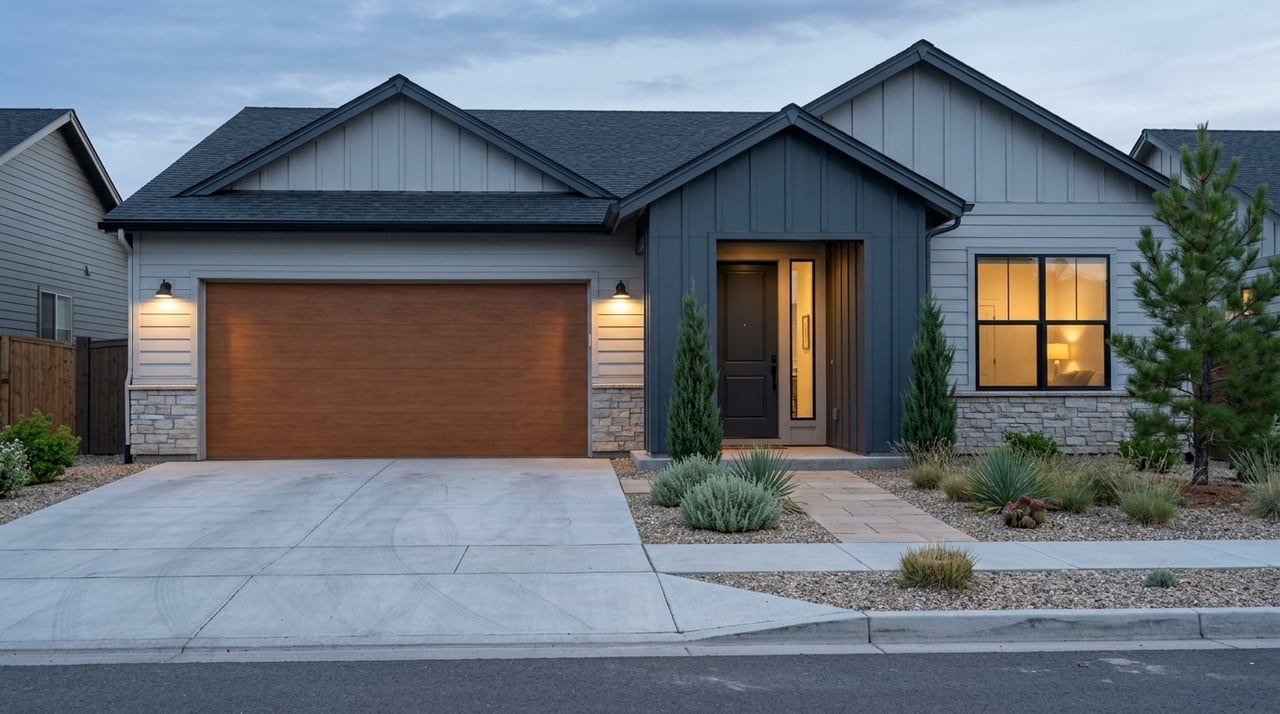
Erie has the strongest detached-home profile of the four areas. Official 2023 town data show that 89.3% of housing units are single-family detached, and only 5.7% are in structures with five or more units.
The town also notes that 3-, 4-, and 5-bedroom homes make up most of the housing stock. If you are looking for a more traditional suburban setup with larger detached homes, Erie may be one of the clearest fits.
Lafayette housing mix
Lafayette offers a more balanced suburban mix. According to its 2020 housing study, 59% of homes are detached, 22% are townhomes or duplex, triplex, or fourplex-style homes, 13% are in smaller apartment buildings, and 6% are mobile or manufactured homes.
For buyers who want options beyond detached housing but still prefer a suburban setting, Lafayette can feel like a middle ground. You may find more variety in home type here than in Erie.
Broomfield housing mix
Broomfield also offers a broad range of housing choices. Its 2023 housing needs assessment shows 63% detached homes, 16% apartments or condos in buildings with 5 to 49 units, and 12% apartments or condos in buildings with 50 or more units.
The city describes housing options that range from starter homes to higher-end apartments and rentals. If flexibility matters to you, Broomfield gives you a wider mix than a purely detached-home suburb.
Home prices and market pace
Boulder is the highest-priced market
Three-month market snapshots ending April 2026 show a clear pricing ladder across these four areas. Boulder has the highest median sale price at $829,572, followed by Erie at $783,595, Lafayette at $669,654, and Broomfield at $629,675.
That price gap becomes even more noticeable when you compare cost per square foot. Boulder sits at $588 per square foot, well above Erie at $268, Lafayette at $352, and Broomfield at $274.
Days on market vary by suburb
Pricing is only part of the picture. The same market snapshots show Boulder at 48 median days on market, Erie at 45, Lafayette at 41, and Broomfield at 28.
That suggests Broomfield is moving the fastest in this group based on median days on market. Lafayette also appears relatively brisk, while Boulder and Erie are somewhat slower by comparison.
Offer activity by market
Boulder averages about two offers on homes and is described as somewhat competitive. Erie averages one offer and is also somewhat competitive.
Lafayette averages two offers and is described as very competitive. Broomfield also averages two offers and is considered somewhat competitive.
Commute and transportation tradeoffs
Boulder fits a walk-bike-transit lifestyle
If your ideal routine includes more walking, biking, or local transit use, Boulder is the strongest fit in this group. The city says it has more than 150 miles of bike-friendly infrastructure and aims for a safe, accessible, multimodal transportation system.
Boulder also places you about a 35-minute drive from downtown Denver and about 45 minutes from Denver International Airport. For buyers who want to stay connected while relying less on daily highway driving, that can be a major advantage.
Broomfield supports regional commuting
Broomfield is closely tied to the US 36 corridor between Denver and Boulder. The city is served by US 36 BRT, fixed-route service on US 287 and 120th Avenue, FlexRide, Access-A-Ride, Easy Ride, and Flatiron Flyer access at US 36 park-and-rides.
That makes Broomfield a practical option if your routine includes regular regional travel. It can be a strong compromise for buyers balancing Boulder access with Denver-area commuting.
Erie offers highway access and transit links
Erie has direct access to I-25, Highway 7, Highway 52, and Highway 287. The town also reports that RTD’s JUMP route connects Erie to key Boulder destinations in about 40 minutes, LD1 reaches Denver’s Union Station in about 35 minutes, and the 120X route gets to downtown Denver in about 20 minutes.
If highway convenience is a priority, Erie checks that box well. It may appeal to buyers who expect to drive more often but still want some transit options available.
Lafayette blends local and regional access
Lafayette uses a combination of local and regional transit. Ride Free Lafayette provides free on-demand service within the city, and the city’s comprehensive plan says RTD routes connect Lafayette with Boulder, Broomfield, Longmont, and Denver.
That gives Lafayette a flexible feel. You may not get Boulder’s in-town transportation profile, but you do get a mix of local convenience and broader regional connections.
Lifestyle and outdoor access
Boulder has the densest amenity base
Boulder stands out for the concentration of everyday amenities and outdoor access. The city cites 45,000 acres of preserved open space, more than 150 miles of trails, and a wide range of dining, shopping, entertainment, and cultural offerings.
If you want the most built-in access to trails, open space, and a broad mix of activities close to home, Boulder leads this comparison. That density is part of what many buyers are paying for.
Erie focuses on suburban recreation
Erie emphasizes parks, trails, and neighborhood recreation. The town reports 13 neighborhood parks, one community park, a dog park, a skate park, 70 miles of trails, 1,500 acres of parks and open space, and 99% of residents living within one mile of a park.
That setup may appeal to buyers who want strong recreational access in a more suburban environment. It offers a different kind of convenience than Boulder, with more emphasis on neighborhood-scale outdoor amenities.
Lafayette offers a small-town outdoor feel
Lafayette’s recreation guide highlights 20 parks, more than 23 miles of soft-surface trails, 1,617 acres of open space, Waneka Lake, and Greenlee Wildlife Preserve. The city also notes free nature programs that contribute to a small-town feel.
For some buyers, that balance is appealing. You get outdoor access and community amenities without the same pricing level as Boulder.
Broomfield balances trails and access
Broomfield describes itself as a balanced community with generous open space, parks, and natural areas. Its open-lands statistics show 8,699 acres of public and private open space, parks, and other open lands, along with 396 miles of trails, sidewalks, and bike lanes.
That creates a strong everyday quality-of-life case for buyers who want both recreation and regional access. Broomfield can be especially attractive if you want to stay mobile across the broader metro area.
Which area may fit you best?
Choose Boulder if daily convenience matters most
Boulder may be the right fit if you want a more urban-feeling environment, a wider mix of attached housing, and easier access to dining, shopping, culture, trails, and bike infrastructure. It is also the most expensive market in this group, both by median sale price and by price per square foot.
If your budget supports it and your lifestyle priorities center on proximity and convenience, Boulder can offer a lot in return. For many buyers, the tradeoff is paying more for a location-rich experience.
Choose Erie if you want a larger detached home
Erie may be the better fit if you are focused on detached housing and want a market dominated by larger homes. Its housing stock strongly favors single-family detached properties, and its road connections support commuting flexibility.
This can make Erie appealing if your home search starts with square footage, bedroom count, and suburban recreation. Compared with Boulder, you are usually trading some amenity density for more detached-home inventory.
Choose Lafayette for a middle-ground option
Lafayette works well for buyers who want a suburban setting with more housing variety and strong access to parks and open space. Its pricing sits below Boulder and Erie in this comparison, while its market is described as very competitive.
If you are looking for balance, Lafayette deserves a close look. It can offer a useful blend of home-type choice, local character, and regional connectivity.
Choose Broomfield for commute-friendly value
Broomfield may be the strongest option if you want a lower median sale price than Boulder or Erie and easy access to the broader region. It also offers a broad housing mix and extensive trail, sidewalk, and bike lane infrastructure.
For buyers who expect to move between Boulder, Denver, and surrounding job centers, Broomfield can be a practical compromise. It combines suburban housing choices with strong transportation connections.
Final thoughts on Boulder vs nearby suburbs
There is no one-size-fits-all answer here. Boulder, Erie, Lafayette, and Broomfield each serve a different type of buyer, and the best choice depends on what matters most to you: home style, budget, commute, or daily lifestyle.
If you want help narrowing down where your budget and priorities line up best, working with a local team can make the process much clearer. Jonathan Pierotti can help you compare neighborhoods, housing options, and market conditions across Boulder Valley so you can move forward with a plan that fits your goals.
FAQs
What is the biggest difference between Boulder and nearby suburbs for homebuyers?
- The biggest difference is usually the mix of price, housing type, and lifestyle. Boulder offers more attached housing, higher prices, and stronger walk-bike-transit access, while nearby suburbs generally offer more detached homes and more suburban commuting patterns.
Is Boulder more expensive than Erie, Lafayette, and Broomfield?
- Yes. In the three-month market snapshots ending April 2026, Boulder had the highest median sale price at $829,572 and the highest median price per square foot at $588.
Which suburb near Boulder has the most detached homes?
- Erie. Official 2023 town data show that 89.3% of Erie housing units are single-family detached.
Which area near Boulder has the fastest market pace?
- Based on median days on market in the snapshots ending April 2026, Broomfield was the fastest at 28 days, followed by Lafayette at 41, Erie at 45, and Boulder at 48.
Which Boulder-area community offers the most walkable and bike-friendly lifestyle?
- Boulder. The city reports more than 150 miles of bike-friendly infrastructure and emphasizes a multimodal transportation system.
Which suburb near Boulder offers a balanced mix of housing choices?
- Lafayette and Broomfield both offer more mixed housing stock than Erie. Lafayette includes detached homes, townhomes, smaller apartment buildings, and mobile or manufactured homes, while Broomfield includes detached homes plus a meaningful share of apartments and condos.