If you are thinking about buying in Colliers Hill, it is easy to focus on the trails, pools, and newer homes and overlook one of the most important parts of ownership: the community fee structure. In this neighborhood, HOA dues are only part of the picture, and understanding what they cover can help you budget with fewer surprises. This guide breaks down how HOA fees, amenities, metro districts, and common rules work in Colliers Hill so you can ask better questions before you buy. Let’s dive in.
Colliers Hill Has More Than One Fee Layer
One of the biggest things to understand about Colliers Hill is that it is a layered community. There is a private master HOA tied to lot ownership, and there are also metro districts that have taxing authority.
That matters because your monthly HOA dues are not the only community-related cost to plan for. You should also expect a separate property tax line item tied to the metro district structure in addition to HOA assessments.
The Town of Erie lists Colliers Hill metro district mill levies at 57.220, 57.107, and 55.664 for the three districts associated with Colliers Hill, Daybreak, and Bridgewater. In practical terms, that means buyers should look at both monthly dues and annual property taxes when comparing total cost of ownership.
What the Master HOA Costs
For most residents outside The Villas, the current master assessment is $96 per month. For homes in The Villas, there is an additional $75 per month, bringing the total to $171 per month.
This is an important distinction because not every home in Colliers Hill carries the same monthly HOA amount. Before you make an offer, confirm whether the home is part of only the master association or also part of The Villas structure.
What HOA Dues Cover in Colliers Hill
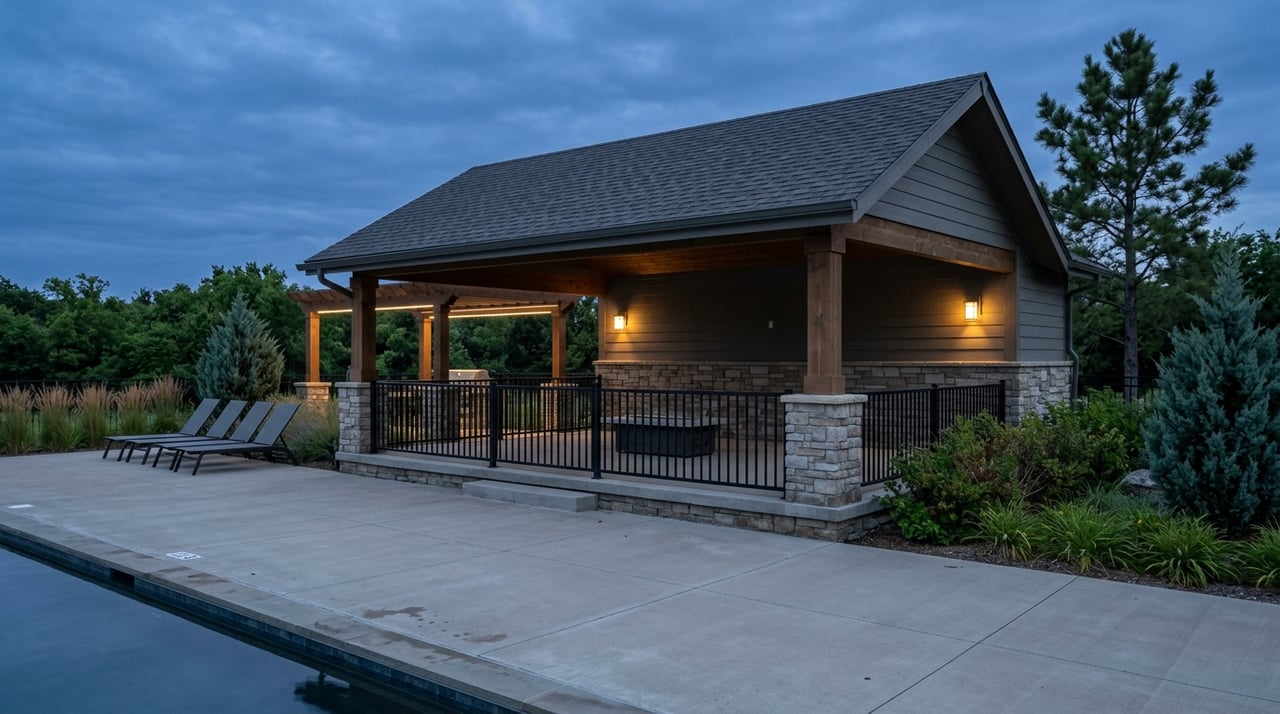
Colliers Hill is not a bare-bones HOA. Community materials highlight an outdoor pool at The Overlook, a 6,500-square-foot amenity center with a gym and activity rooms, parks and open space, and miles of paths and trails.
The dues appear to support both day-to-day operations and long-term upkeep. According to the 2026 budget, funding goes toward trash and recycling, landscape maintenance, irrigation, grounds maintenance, snow removal, pond and storm-drain maintenance, playground and fence repairs, holiday lighting, clubhouse and pool utilities, clubhouse and pool repairs, professional management, insurance, legal and administrative costs, and reserve contributions.
A notable line item in the 2026 budget is a $320,000 reserve contribution. That is worth paying attention to because reserves help a community prepare for repair and replacement costs over time.
Services Included for Most Owners
For residents outside The Villas, the June 2025 community newsletter says the $96 monthly fee covers:
- Trash and recycling
- The monthly newsletter
- Common-area maintenance
- Snow removal in common areas
- Covenant enforcement
- Social activities
- Clubhouses and pools
- Replacement reserves
For many buyers, that list helps explain where the dues go. You are paying for access, maintenance, and ongoing operations across a planned community with shared amenities.
What The Villas Extra Fee Covers
If you are looking at a home in The Villas, the additional $75 per month covers more than just access. It includes extra maintenance responsibilities tied to that section of the neighborhood.
According to the June 2025 newsletter, The Villas fee helps pay for:
- Additional maintenance
- Driveway snow removal
- Selected trail and sidewalk snow removal
- Common driveway repair or replacement
- Irrigation for The Villas common areas
That added scope is one reason The Villas owners pay more each month. It is a good example of why buyers should confirm the exact fee structure for the specific property they are considering.
Amenities Buyers Should Know About
Colliers Hill offers a strong amenity package, but access and usage are managed with specific rules. That is good to know upfront so you understand what is included and what may involve an extra step or cost.
Both the Overlook and Ascent clubhouses use key-card access. Households must complete one annual pool waiver, and cards are activated within 72 hours.
Pool access runs from the Saturday before Memorial Day through Labor Day. If you plan to use the pool often, it is also helpful to know that lost or additional key cards cost $25 each.
Clubhouse Rental Rules
The Overlook clubhouse can be rented for $50 per hour with a two-hour minimum. The Ascent clubhouse is not available for rental.
These are not huge costs, but they are useful details if you picture hosting a gathering or using community spaces regularly. It is one more reminder that amenities are actively managed, not simply open-access features with no rules attached.
Parks and Open Space Maintenance
Colliers Hill also includes parks, trails, and open areas, but not every outdoor feature is maintained by the same entity. That is where the layered structure becomes important again.
For example, the Town of Erie says Ironstone Park is a 9.3-acre neighborhood park with open turf, native areas, a large playground, a loop trail, shelters, a basketball court, sand volleyball, lawn-game areas, and parking. The park is currently district-owned and maintained during a warranty period and is expected to transfer to the Town of Erie around 2027.
Erie also notes that the adjacent amenity center and pool are separate from the park project and are managed by the metro district. So if you are trying to understand who maintains what, the answer may vary depending on the feature.
HOA Rules and Maintenance Responsibilities
A common buyer assumption is that the HOA handles everything outside the home. In Colliers Hill, that is not the case.
The declaration says owners are responsible for maintaining grading and drainage on their lots, while the association maintains grading and common elements in common areas. That split matters, especially if you are comparing Colliers Hill to a community with broader exterior maintenance.
Common Covenant Restrictions
Like many planned communities, Colliers Hill has rules that can affect everyday use of the property. The declaration includes restrictions and standards related to:
- Fences and ARC approval
- Trailers and recreational vehicles
- Abandoned or inoperable vehicles
- Household pets
- Temporary structures such as sheds
- Leasing, with tenants subject to HOA documents
These are the kinds of details that can affect how you use the home, where you park, and what changes you can make. They are worth reviewing early, not after you are under contract.
Exterior Changes Need Approval
Colliers Hill’s design review process is fairly detailed. Exterior paint, landscaping, accessory buildings, concrete work, fencing, patios and decks, hot tubs, and roofing-related changes require a submittal.
The Architectural Review Committee may take up to 45 days to review a request. If you already know you want to install a fence, redo landscaping, or make exterior upgrades, build that timeline into your planning.
Special Assessments and Closing Costs to Watch
Annual HOA assessments are designed to cover expected needs, reserves for periodic repair or replacement, and insurance deductibles. The declaration also allows for special assessments for capital improvements or operating deficits, subject to the approval requirements in the governing documents.
That does not mean a special assessment is inevitable, but it does mean buyers should understand that monthly dues are not the only possible community charge over time. This is especially true in an amenity-rich neighborhood with ongoing infrastructure and maintenance needs.
Possible Settlement Charges
The declaration also authorizes a non-refundable working-capital contribution for the first owner of a lot equal to two times the then-current monthly assessment. It also allows other charges such as transfer fees, copy charges, return-check fees, demand letters, and similar administrative costs.
If you are buying in Colliers Hill, ask what charges may be due at settlement. Those line items can be easy to miss if you focus only on purchase price, taxes, and lender fees.
What Future Changes Could Mean for Owners
Colliers Hill appears to still be in a transition period in some areas. A 2026 metro district meeting agenda references tract conveyance to the Town of Erie, town acceptance and maintenance of open space, parks, landscape, and trails, developer tract conveyance to the district, the HOA’s public-improvement maintenance agreement, and a possible annual maximum 10 percent discretionary increase in facility fees.
For buyers, that does not automatically signal a problem. It does mean some maintenance duties, asset transfers, and cost structures may continue to evolve as the community matures.
The same agenda also references public-improvement construction status, a pond outlet, a 2026 stormwater-maintenance contract, and the WCR 5 realignment and easement process. In other words, Colliers Hill still has active infrastructure topics worth monitoring.
Fee Stability Looks Reasonable for Now
The 2026 HOA budget keeps the projected monthly assessment at $96, while The Villas remains at $75 per month on its separate ledger. That suggests some near-term fee stability at the HOA level.
At the same time, the 2026 budget shows that 2025 included meaningful capital work such as concrete, sidewalk and trail repairs, irrigation-pump and pond work, pool diagnostics, landscape-controller rebuilds, playground maintenance, cobblestone pond improvements, and new pool furniture. That is a useful reminder that even a well-run community can have periodic repair and replacement needs.
Smart Questions to Ask Before You Buy
If you want a clearer picture of ownership costs and expectations in Colliers Hill, ask focused questions tied to the specific property. A little due diligence upfront can save you from confusion later.
Here are some of the most important questions to ask:
- Is this home in the master association only, or also in The Villas?
- What is the exact current monthly assessment for this property?
- Which amenities are included in dues, and which require extra fees or reservations?
- What are the current metro district taxes for this address?
- What maintenance is handled by the HOA, the metro district, the Town of Erie, and the owner?
- Are there any working-capital, transfer, or other closing-related charges due at settlement?
- What restrictions apply to parking, trailers, pets, trash containers, or leasing?
- What is the approval timeline for fences, patios, landscaping, paint, or roof work?
When you ask these questions before you buy, you get a more complete view of what living in Colliers Hill really looks like beyond the listing photos.
If you are weighing a move to Colliers Hill or comparing it to other Erie-area neighborhoods, having the right guidance can make the numbers and documents much easier to sort through. For practical, neighborhood-level advice tailored to your home search or sale, connect with Jonathan Pierotti.
FAQs
What are the HOA fees in Colliers Hill?
- For most homes outside The Villas, the current master HOA assessment is $96 per month. Homes in The Villas pay an additional $75 per month, for a total of $171 per month.
What do Colliers Hill HOA dues cover?
- HOA dues help cover items such as trash and recycling, common-area maintenance, snow removal in common areas, social activities, clubhouses and pools, professional management, repairs, and reserve funding.
Do Colliers Hill owners pay metro district taxes too?
- Yes. In addition to HOA dues, owners should budget for a separate property tax line item tied to the metro districts associated with the community.
What amenities are available in Colliers Hill?
- Community materials highlight the Overlook outdoor pool, a 6,500-square-foot amenity center with a gym and activity rooms, parks and open space, and miles of paths and trails.
Can you rent the clubhouse in Colliers Hill?
- Yes, the Overlook clubhouse can be rented for $50 per hour with a two-hour minimum. The Ascent clubhouse is not rentable.
Do exterior changes in Colliers Hill need HOA approval?
- Yes. Changes such as exterior paint, landscaping, fencing, patios, decks, hot tubs, concrete work, accessory buildings, and some roofing-related work require review, and the ARC may take up to 45 days.
Does the HOA maintain everything outside the home in Colliers Hill?
- No. Owners are responsible for maintaining grading and drainage on their own lots, while the HOA maintains grading and common elements in common areas.
Are there extra fees at closing for a Colliers Hill home purchase?
- There can be. The governing documents allow a working-capital contribution for the first owner of a lot equal to two times the then-current monthly assessment, along with certain administrative charges such as transfer-related fees.